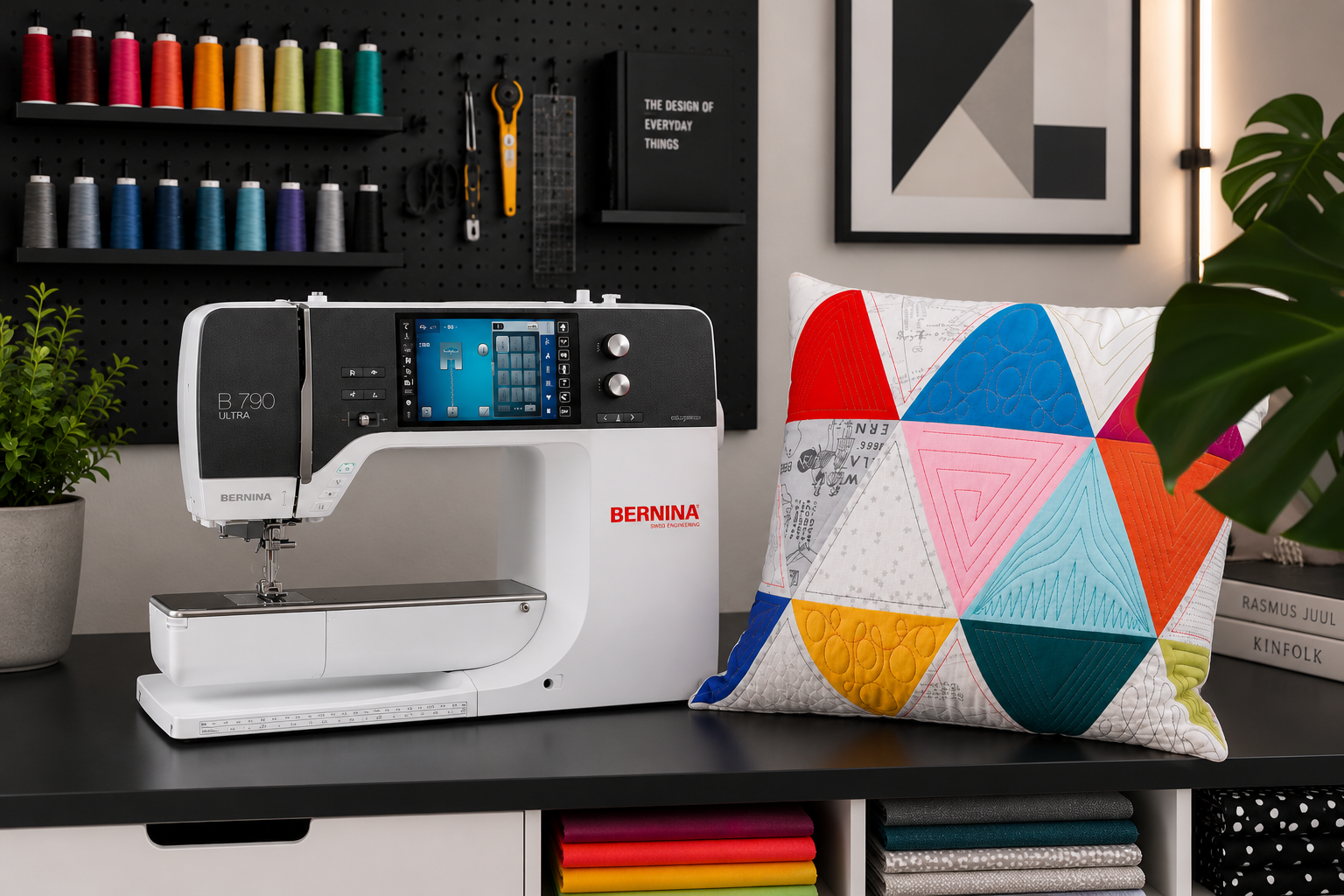
Last week, I introduced you to my shiny new studio companion: the BERNINA 790 ULTRA.
And yes, she can do a lot. A lot a lot.
But instead of giving you a grand tour through every button, bell and clever little feature, I thought we’d do this the Zen Chic way: take a real project, look at what I actually wanted to achieve, and see where the technology made my creative life easier.
Because ultimately, that’s what I care about. Not how long the feature list is — but whether a feature helps me get the idea in my head onto the fabric without an unnecessary amount of muttering at my sewing machine.
And for that, I have the perfect project.
You may have seen this pillow before
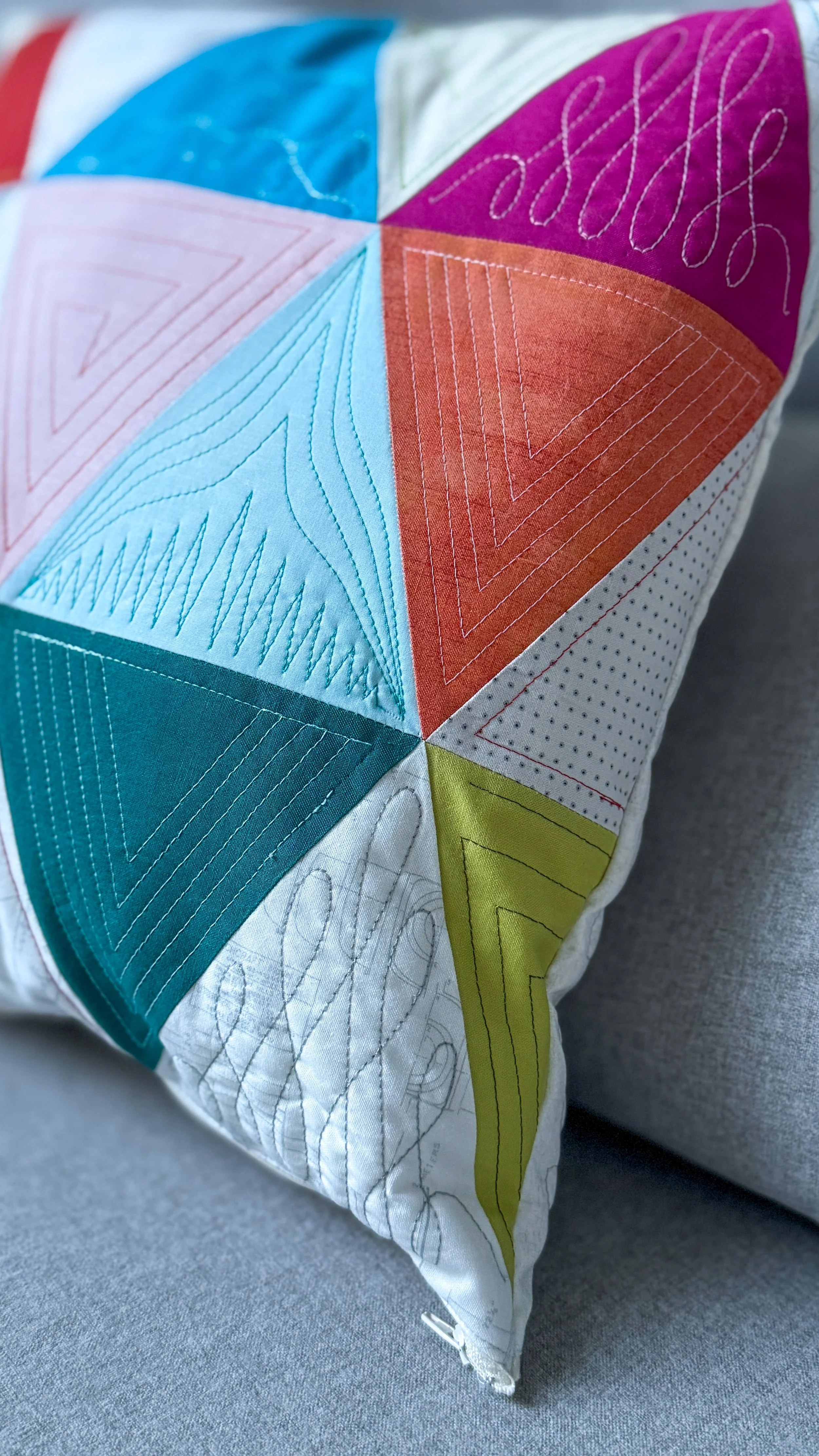
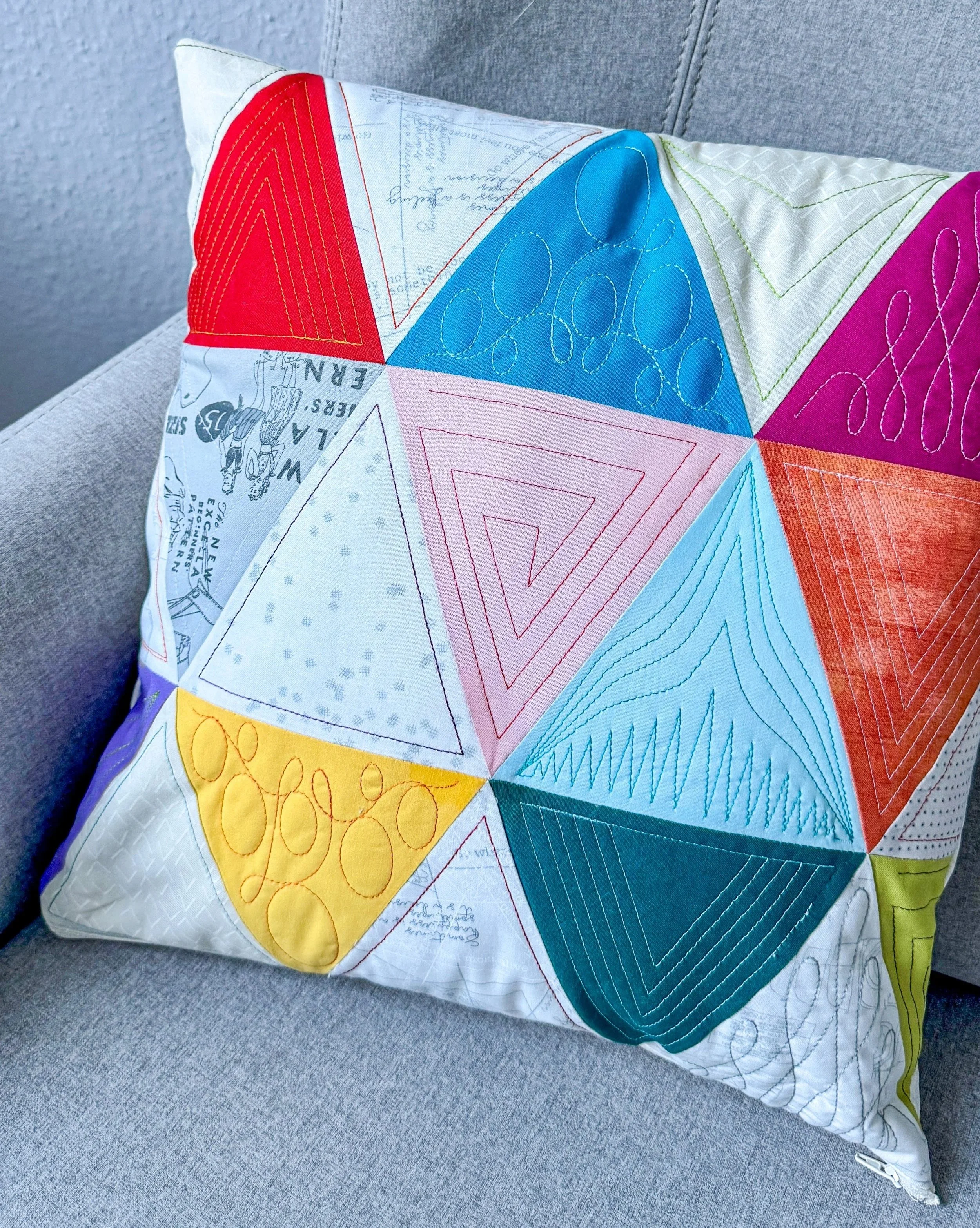
This colorful geometric pillow made a little appearance in my BERNINA 790 ULTRA promo video.
The design is very much my cup of tea: simple geometric shapes, strong color, lots of negative space within each section — and then quilting and embroidery that become part of the graphic design.
I used mostly solids for the colored areas, with a little Moda Grunge sneaking into the orange section. For this kind of project, quiet fabrics work beautifully because they give the stitching room to shine. Solids are perfect, but subtle blenders such as Spotted, Whisp or Grunge would work just as well.
And then came the fun part.
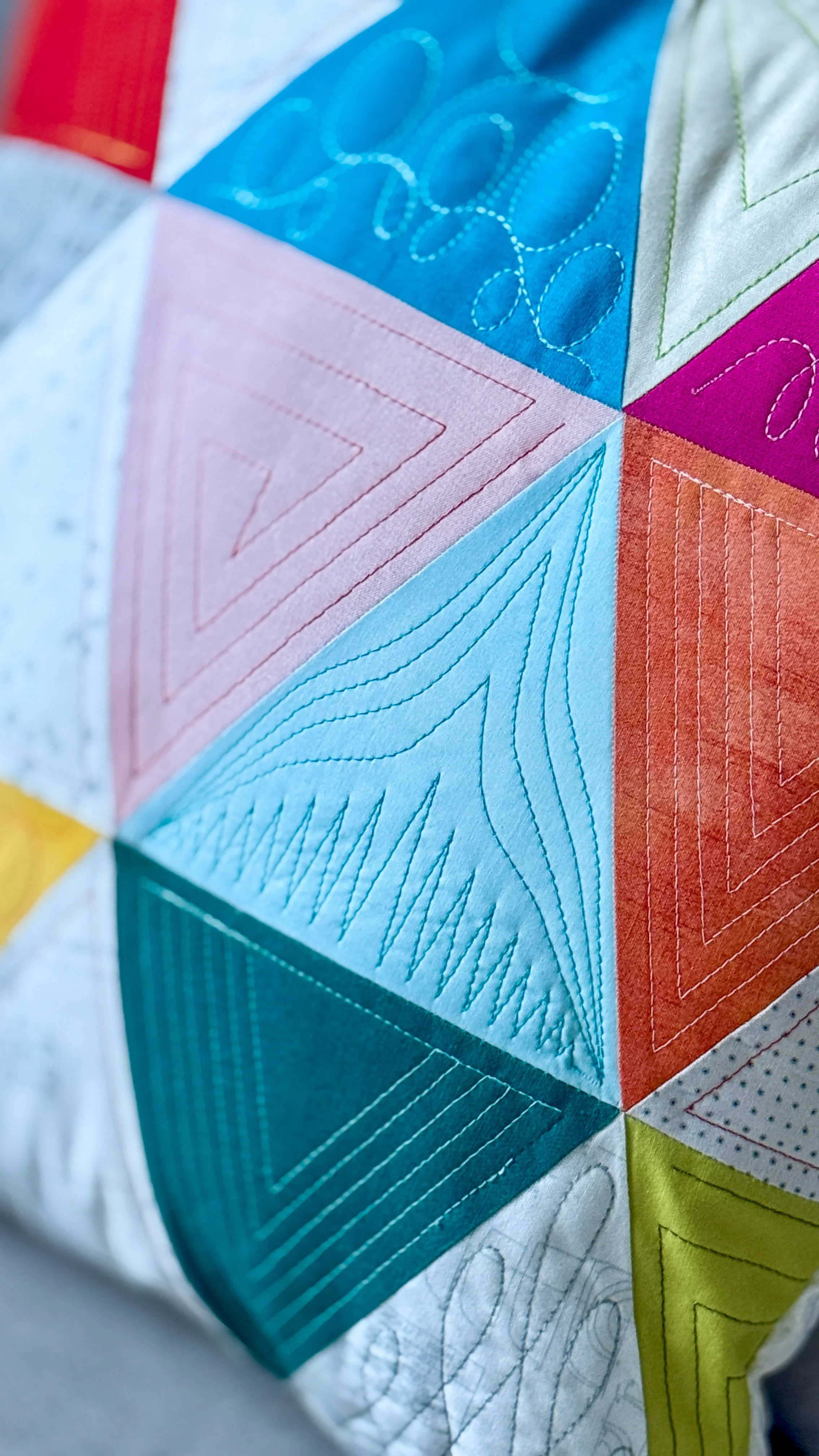
Each of those geometric sections needed its own stitched design.
Some are straight and architectural. Some curve. Some loop around rather enthusiastically.
But they all have one thing in common:
They need to land in the right place.
Precision without the “that looks about right” method
You know that highly sophisticated quilting technique where you look at something, tilt your head slightly and think:
Yep. That should be about right.
I have used it.
We have probably all used it.
Unfortunately, geometric designs have a nasty habit of revealing exactly how “about right” our about-right actually was.
That’s where two features of the BERNINA 790 ULTRA became particularly interesting to me: the Laser Pinpoint and 3-Point Placement.
Not because they add more technology for technology’s sake, but because both solve very practical positioning problems.
First: show me exactly where I am
The Laser Pinpoint projects a visible point or line onto the fabric so you can see exactly where the needle is going to land before it gets there.
That sounds like a small thing.
Until you are trying to follow a seam, hit an intersection precisely or line up stitching with an existing element of your design.
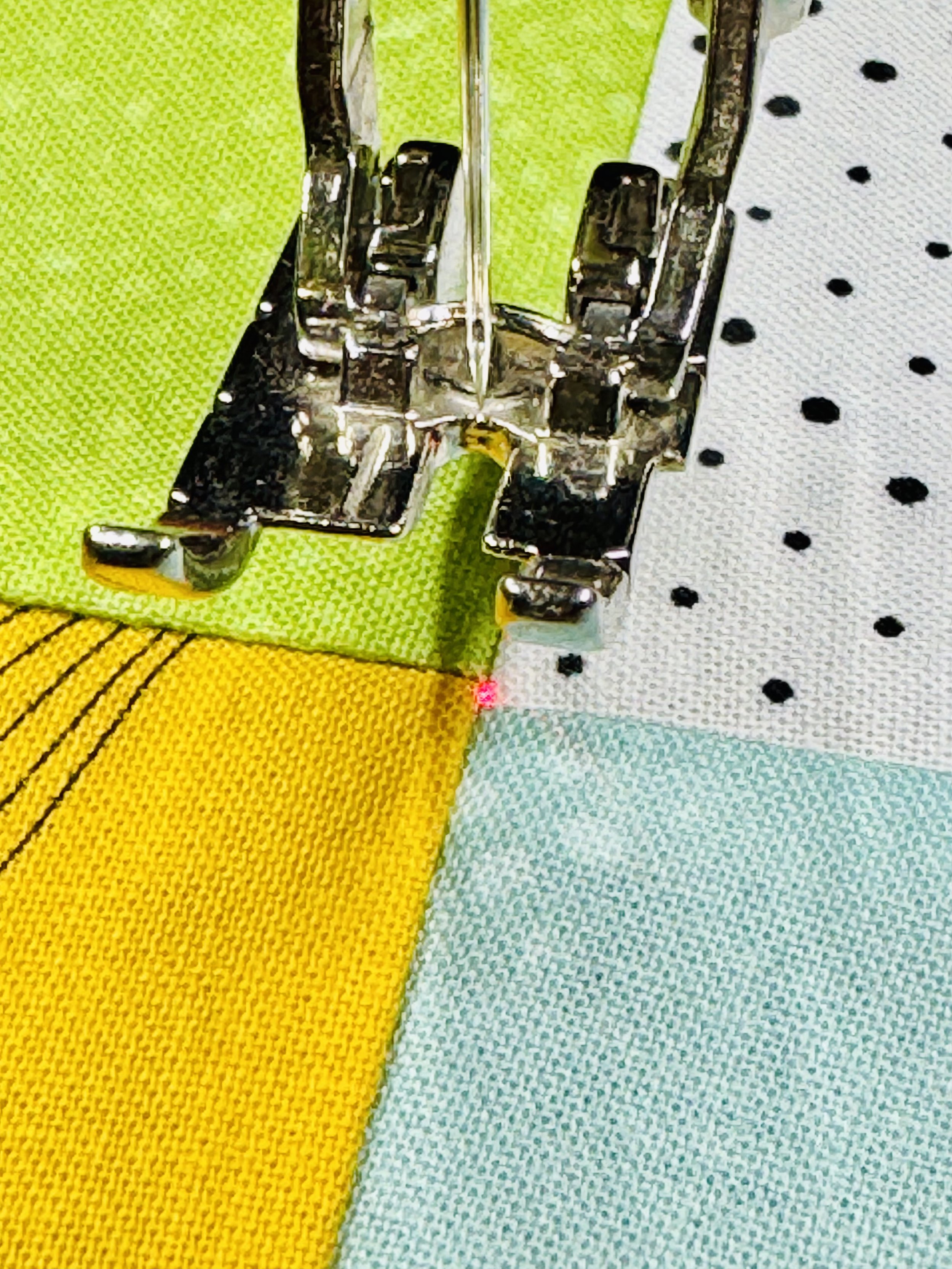
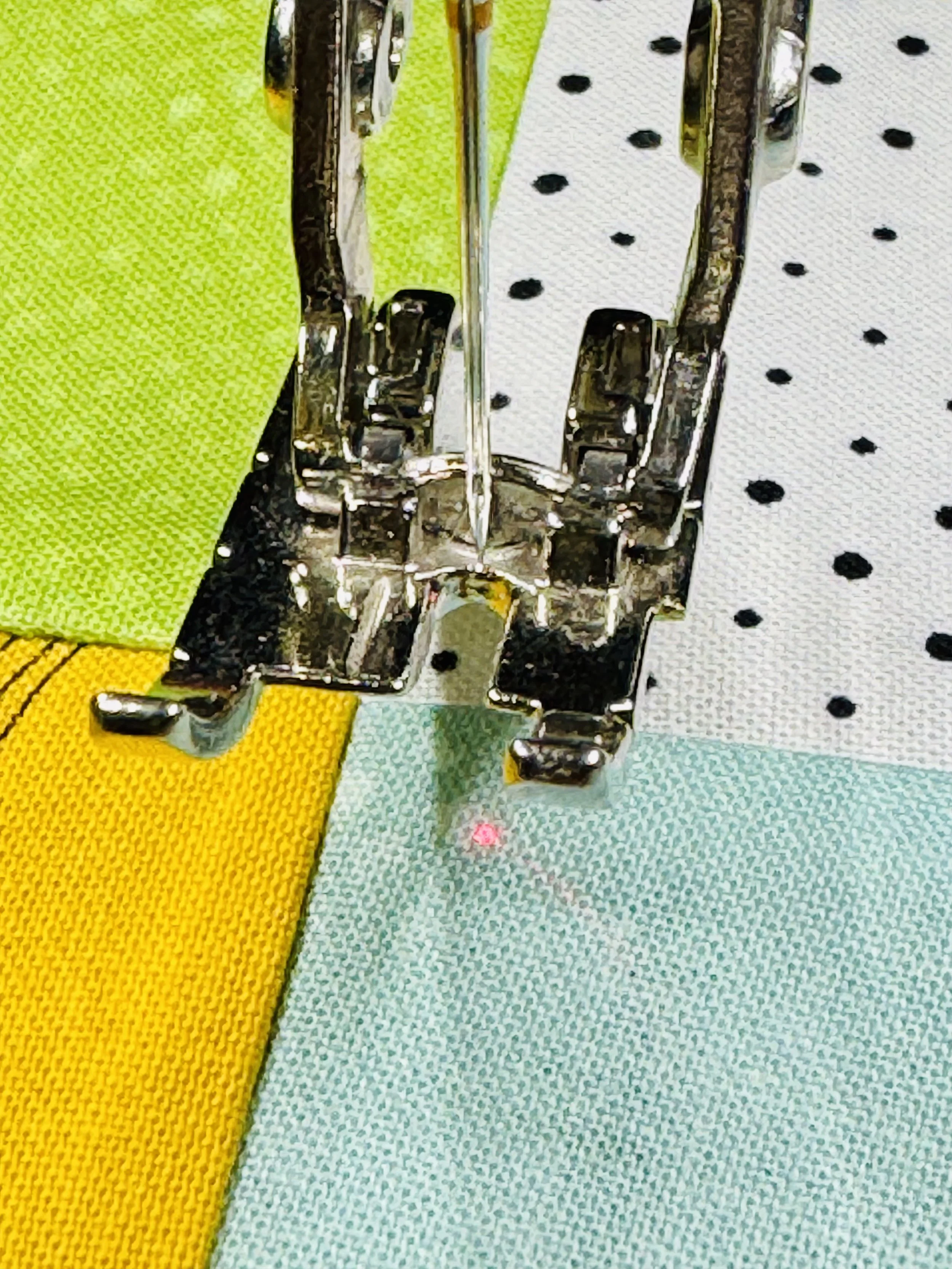
Instead of watching the presser foot and mentally calculating where the needle ought to arrive, you have a visual reference directly on the fabric.
That’s especially useful when you want the needle to land exactly on an intersection — or when you want to maintain a consistent distance from a seam or edge, for example when topstitching or positioning a motif.
For modern quilting, where a millimeter here or there can be surprisingly visible, I find that kind of guidance rather appealing.
Less guessing. More sewing.
And then there’s 3-Point Placement
This is where our little geometric pillow becomes particularly useful.
Look closely at those individual sections. They aren’t simply blank rectangles waiting politely for an embroidery design.
They have angles. They have boundaries. And the stitching needs to relate to those boundaries.
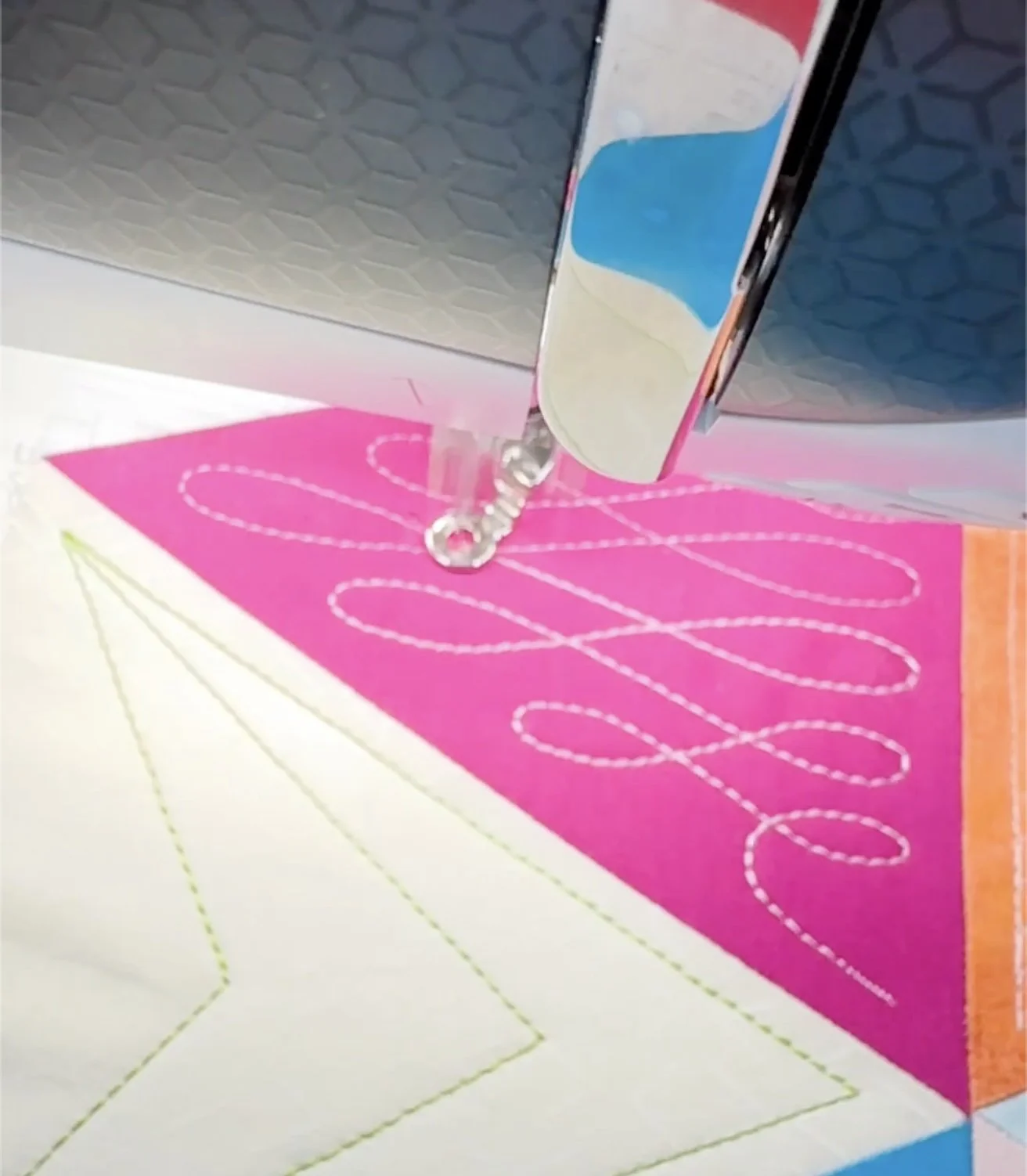
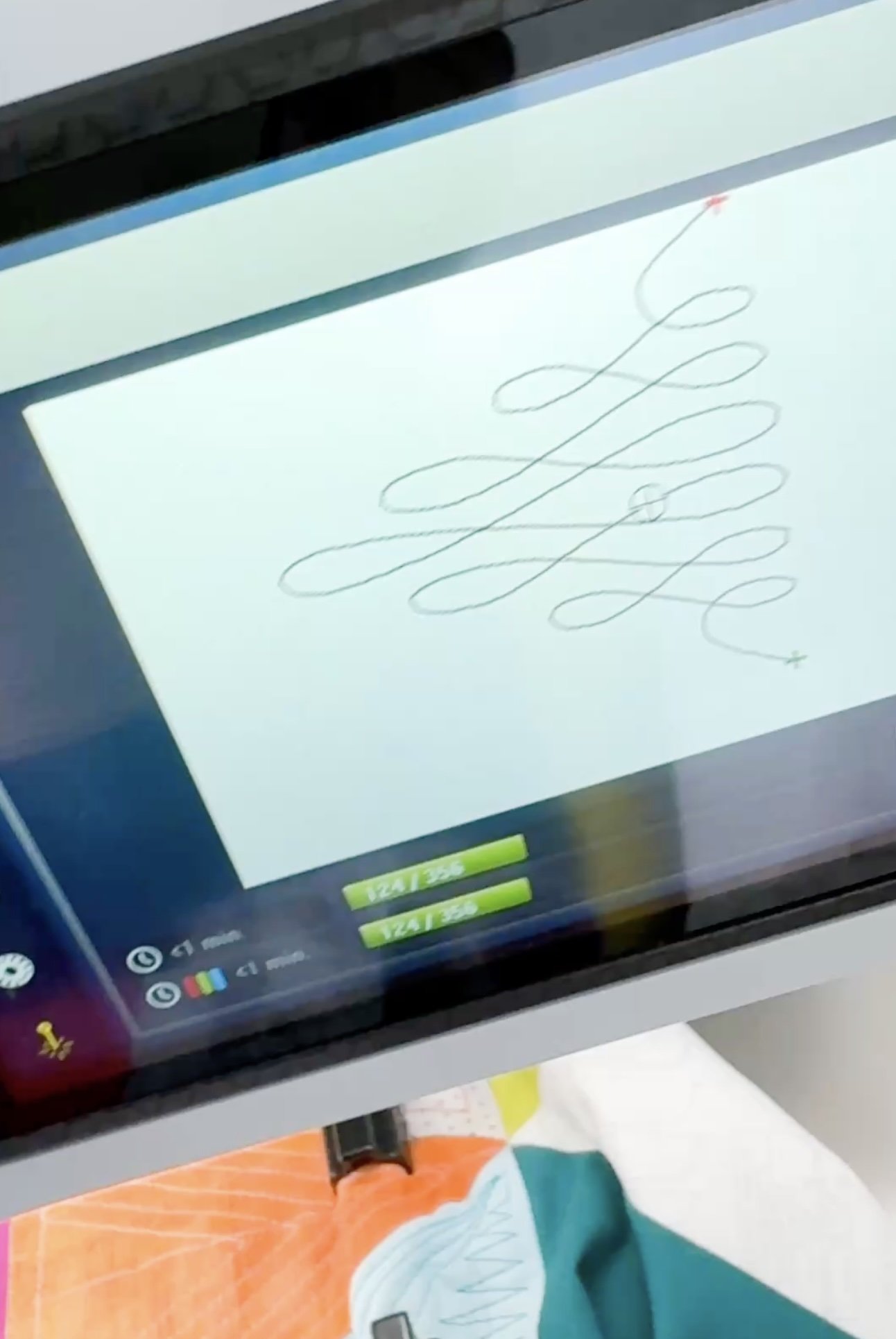
With 3-Point Placement, I can define three points on the fabric and use them to position the embroidery design in relation to the actual pieced shape.
In other words, I’m not asking the fabric to behave perfectly inside the hoop.
I’m using the laser pointer and am telling the machine:
This is my shape. These are the points that matter. Please make the design behave accordingly.
Now that is my kind of delegation.
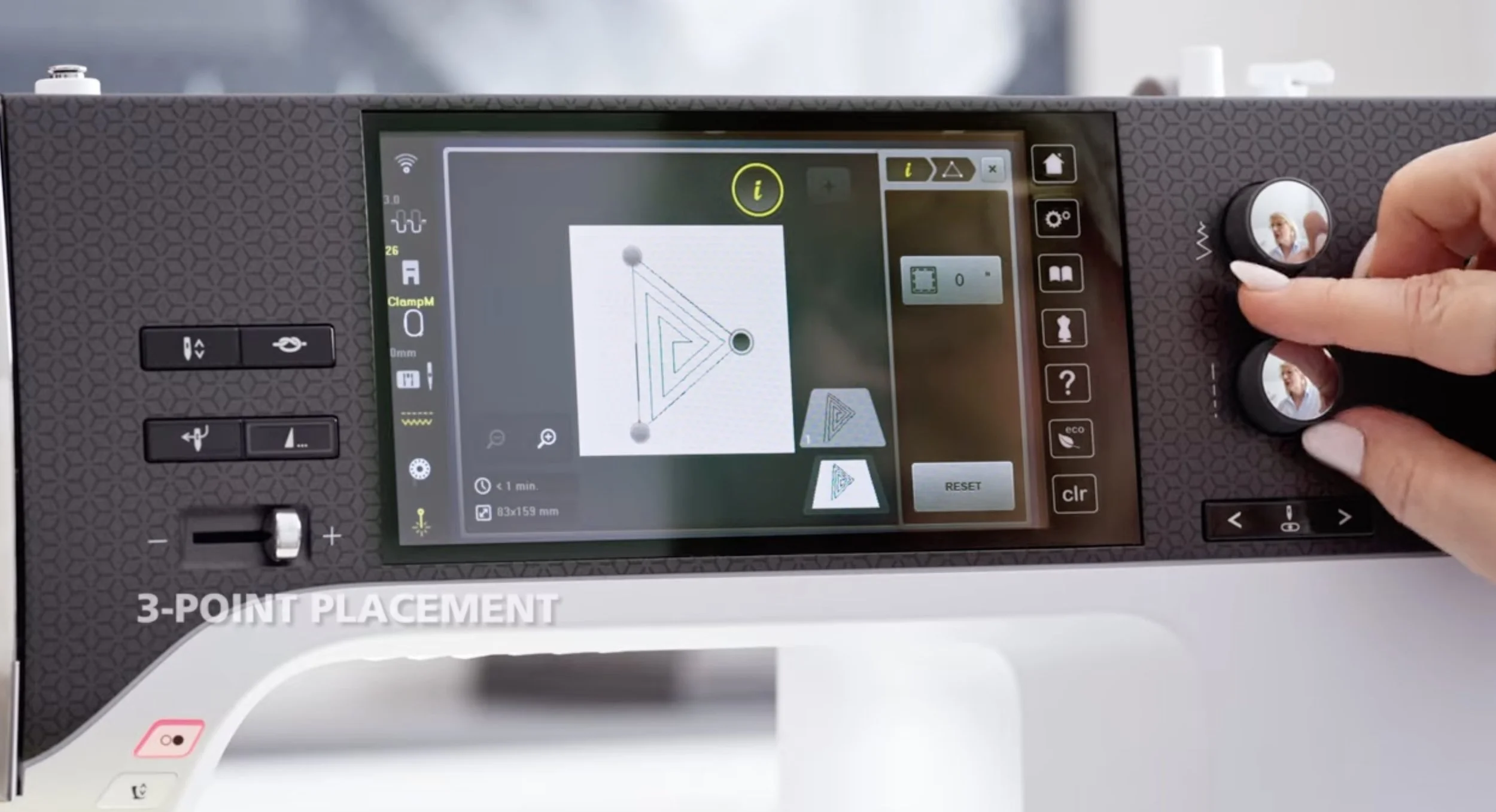
For this pillow, that means the stitched designs can visually follow the geometry of the piecing instead of looking as though they were simply dropped somewhere into the general neighborhood.
And when several shapes meet at one precise point, as they do here, those little differences matter.
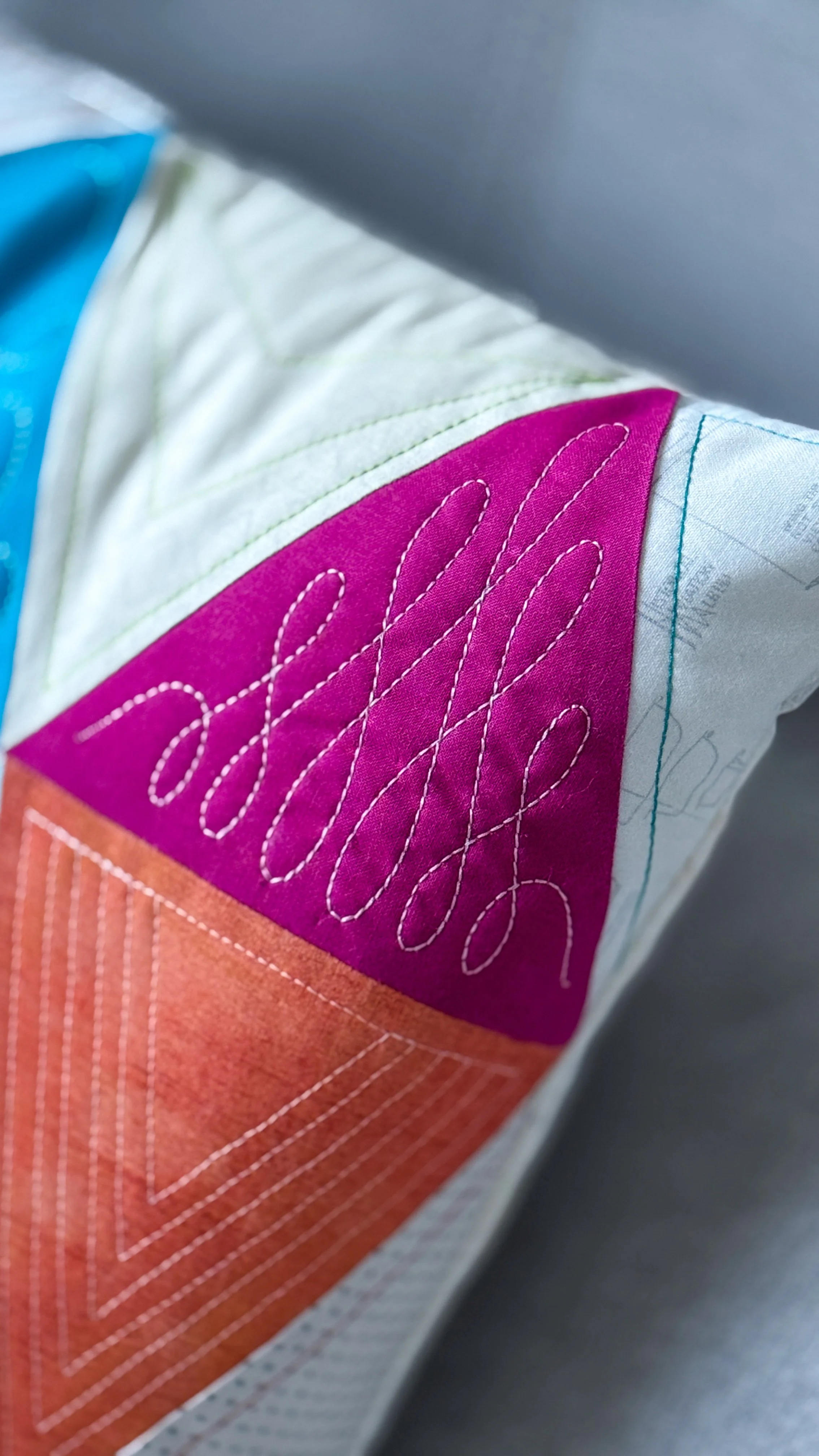
Technology should serve the design
This is probably the part I like most.
I don’t want technology to make the creative decisions for me. That’s my job — and frankly, I’m rather attached to it.
What I do want is technology that removes some of the fiddly bits between the idea and the finished piece.
I decide where the line belongs.
I decide how the stitching should interact with the fabric.
I decide whether that turquoise section wants straight lines, curves or something wonderfully loopy.
The machine simply gives me better tools for putting those decisions exactly where I intended them to go.
And that, to me, is precision the Zen Chic way.
Not perfection for perfection’s sake.
Not the sewing police standing over your shoulder with a ruler.
Just fewer moments of “Hmm. I really thought that was centered.”
And considerably more time for the fun part: designing.